






 Ruby
 Golang
 .NET
 MCP
 C++

Hacktoberfest is a month-long open-source event held every October. It is powered by MLH and DEV, with DigitalOcean as presenting partner. This year's the focus was building projects with open-source AI. People built at in-person Fests around the world and in five DEV Challenges online. 115,385 people took part in total.
SerpApi joined Hacktoberfest this year as a partner. We sponsored a Best Use of SerpApi prize in each of the five DEV Challenges and hosted a livestream on making open models smarter with tools, MCP, and skills.
By the end of the event, 174 builders had mentioned SerpApi across 201 challenge write-ups. We received 176 eligible entries for the Best Use of SerpApi prizes.
Best Use of SerpApi Winners
The event opened with a weekend challenge, followed by four weekly challenges. Each challenge had its own theme, and participants had to build a solution around it. Here are the Best Use of SerpApi winners from each challenge.
Weekend Challenge: Pīzhù
Built by Muhammad Murtuza Hussain.
Theme: Build for a Friend.
Muhammad built Pīzhù for a friend, Joy, a master's student in Ireland whose first language is Mandarin. Her essays kept coming back with comments about expression and academic tone. Grammar checkers and chatbots respond by rewriting the paragraph, which teaches nothing and can become an academic-integrity problem.
Pīzhù (批注, "margin notes") never rewrites. Gemma 4 underlines the exact words a marker would pause on, explains why in English and Chinese, and leaves every change to the student.
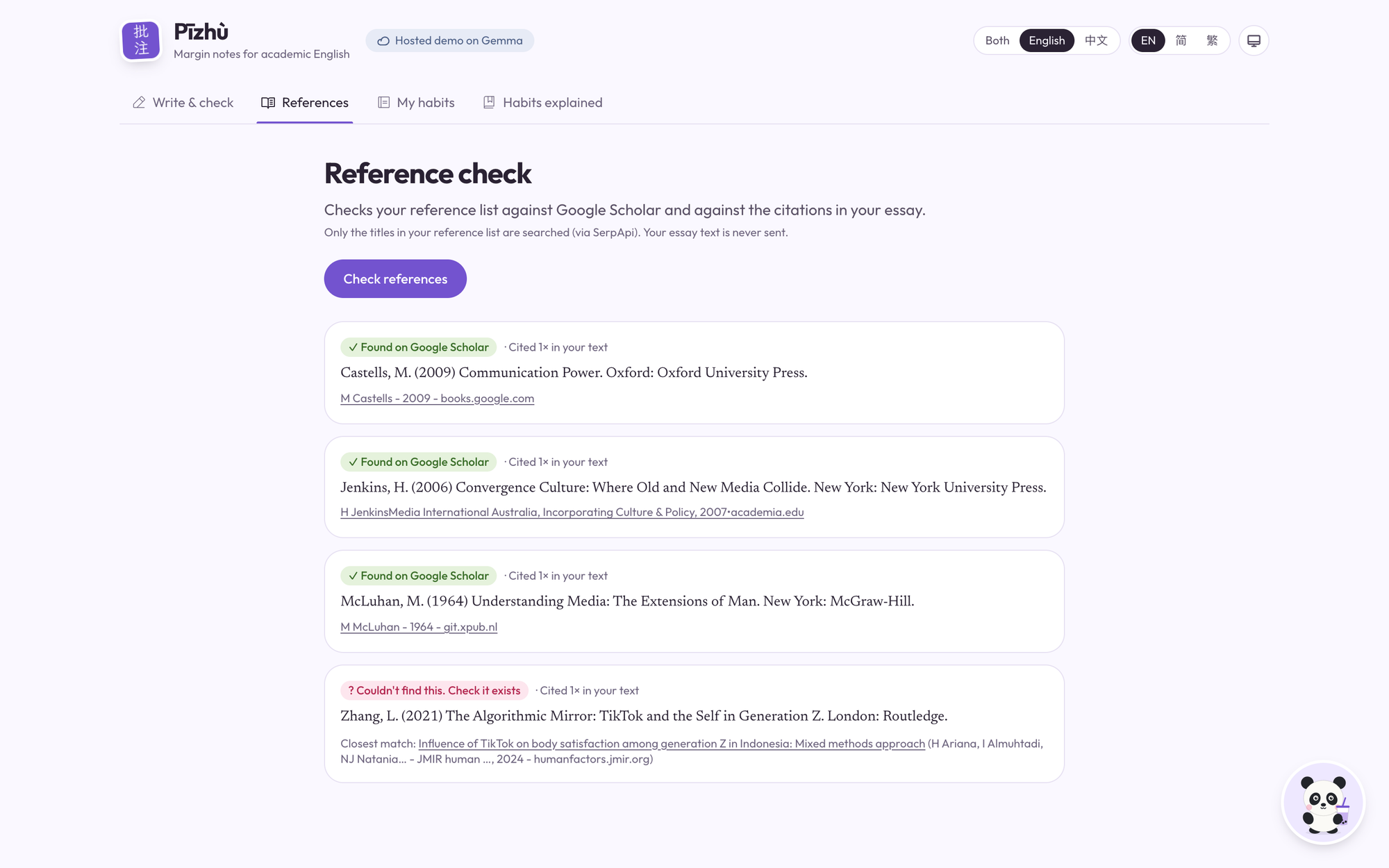
SerpApi checks the reference list. Gemma extracts each entry, and SerpApi's Google Scholar API looks up every title and marks it as found, found with different details, or not found. In the sample essay, it found three real books and flagged the one reference Muhammad had invented as a test.
Read the Pīzhù write-up on DEV · Source on GitHub
Week 1: Walk Journal
Built by Nikitha Kishore Avadootha.
Theme: Touch Grass.
Nikitha is a college student who wanted walks to feel like a break, which step counters never managed. Walk Journal turns a walk into a short quest of three to seven photo tasks, then tells you to put your phone away. It measures its own screen time, so it knows if you kept looking at the phone.
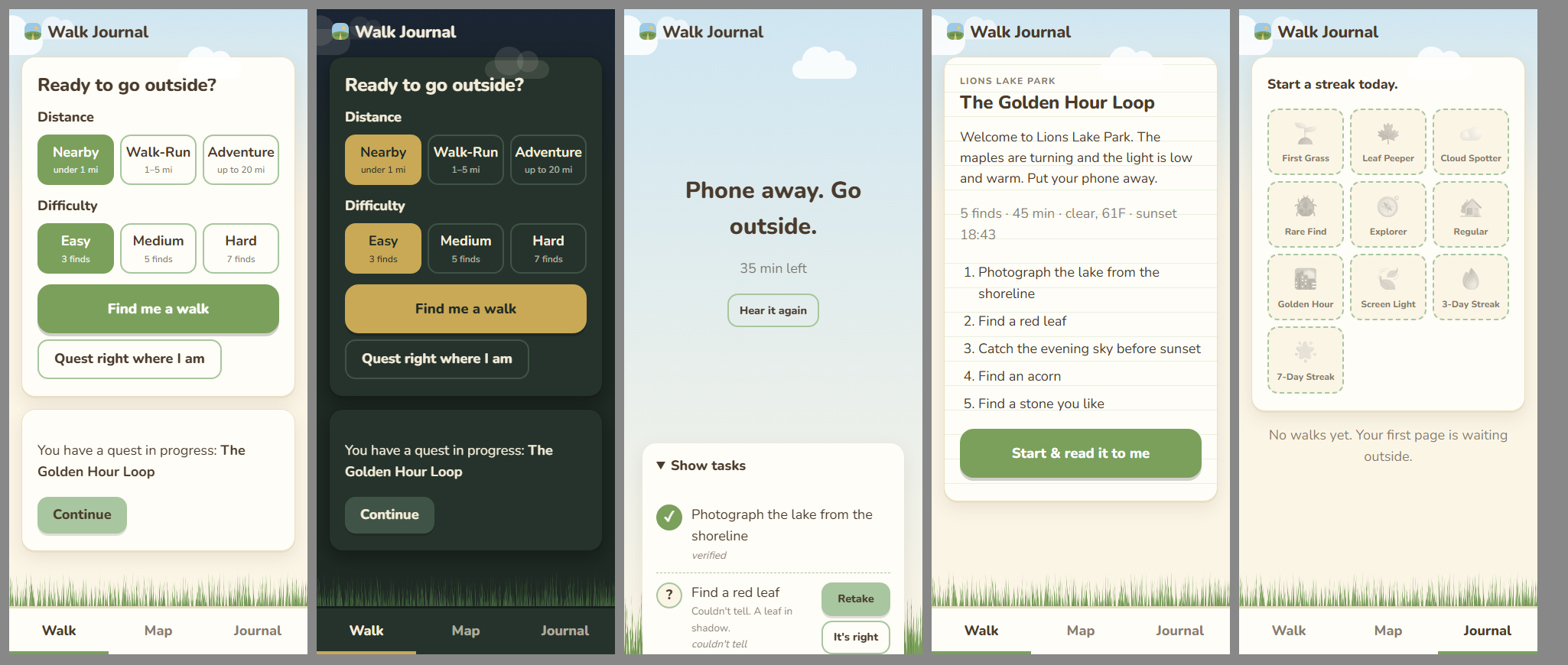
Ask it to find a walk, and SerpApi's Google Maps API returns real parks and trails nearby. A local Gemma 4 picks the best three for right now, then writes a quest for the place, season, and time of day.
Read the Walk Journal write-up on DEV · Source on GitHub
Week 2: RecallDesk
Built by Subarna Maity, Soumyadeep Dey, and Sourish Panda.
Theme: Side Hustle.
In the US, resale shops may not sell recalled products, but intake staff don't have time to read each week's recall notices. The team started by measuring the problem. They searched eBay through SerpApi's eBay Search API for 237 recalled products, and collected 12,562 unique listings. Only 45 of the titles named a recalled model.
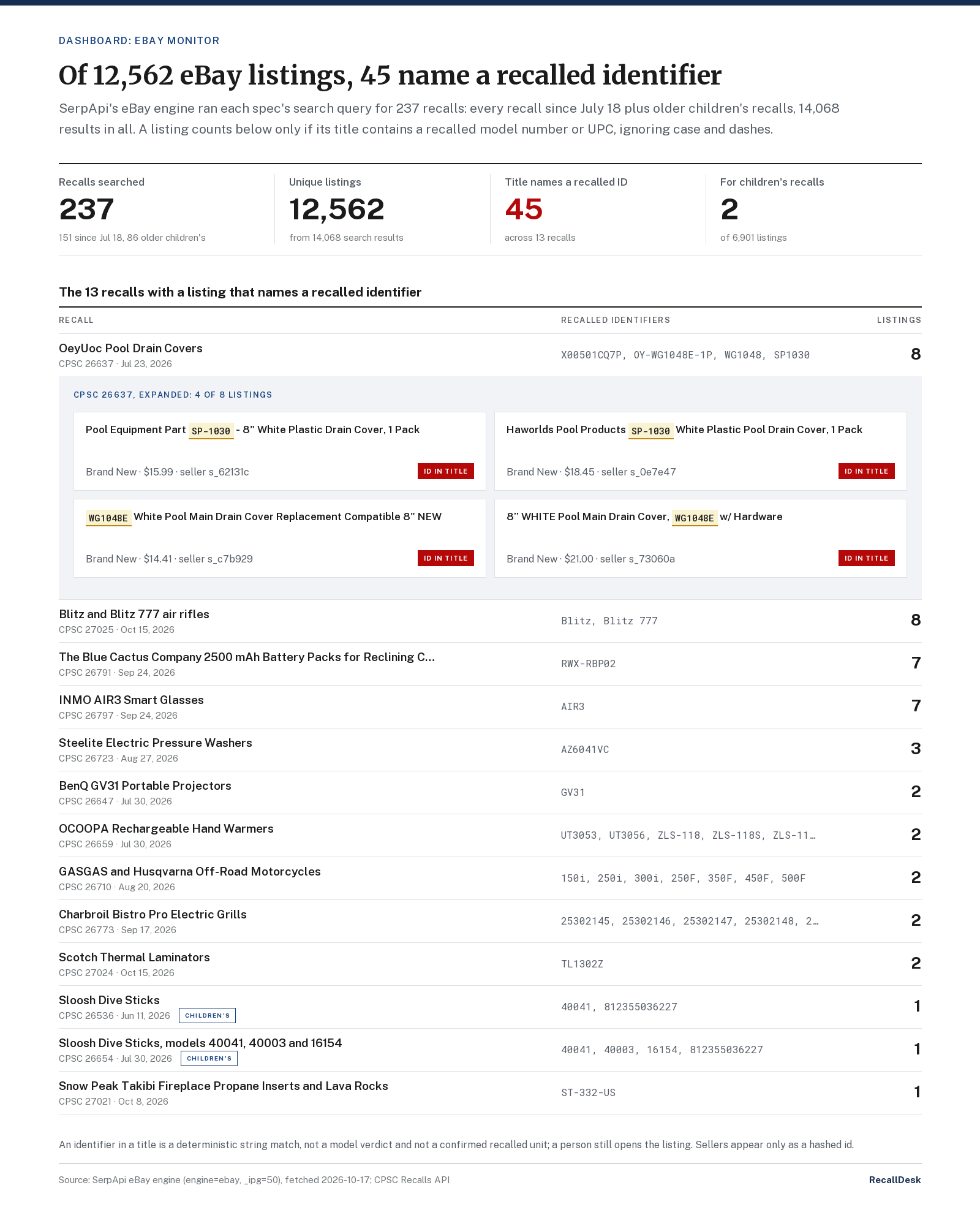
Every Thursday, RecallDesk turns each new recall into a structured spec, compares it against a shop's stock and live listings, and prints one card telling staff which items not to sell and which labels to check.
Read the RecallDesk write-up on DEV · Source on GitHub
Week 3: Lazy Scholar
Built by Chamod Dhananjaya.
Theme: Slow and Steady.
Chamod, a third-year IT student in Sri Lanka, needs funding to study. Scholarships, grants, paid internships, and hackathon prizes exist, but most search results are closed, limited to other countries, or lists that link to more lists.
Lazy Scholar does the search overnight. At 2 AM, a GitHub Actions job runs six Google searches through SerpApi's Google Search API. Gemma 4 reads each result and checks whether Chamod is eligible, whether it is still open, and whether there is real money in it. By morning, a digest lists each match with its deadline, amount, and a fit score out of 100, plus a drafted application email for the best one.
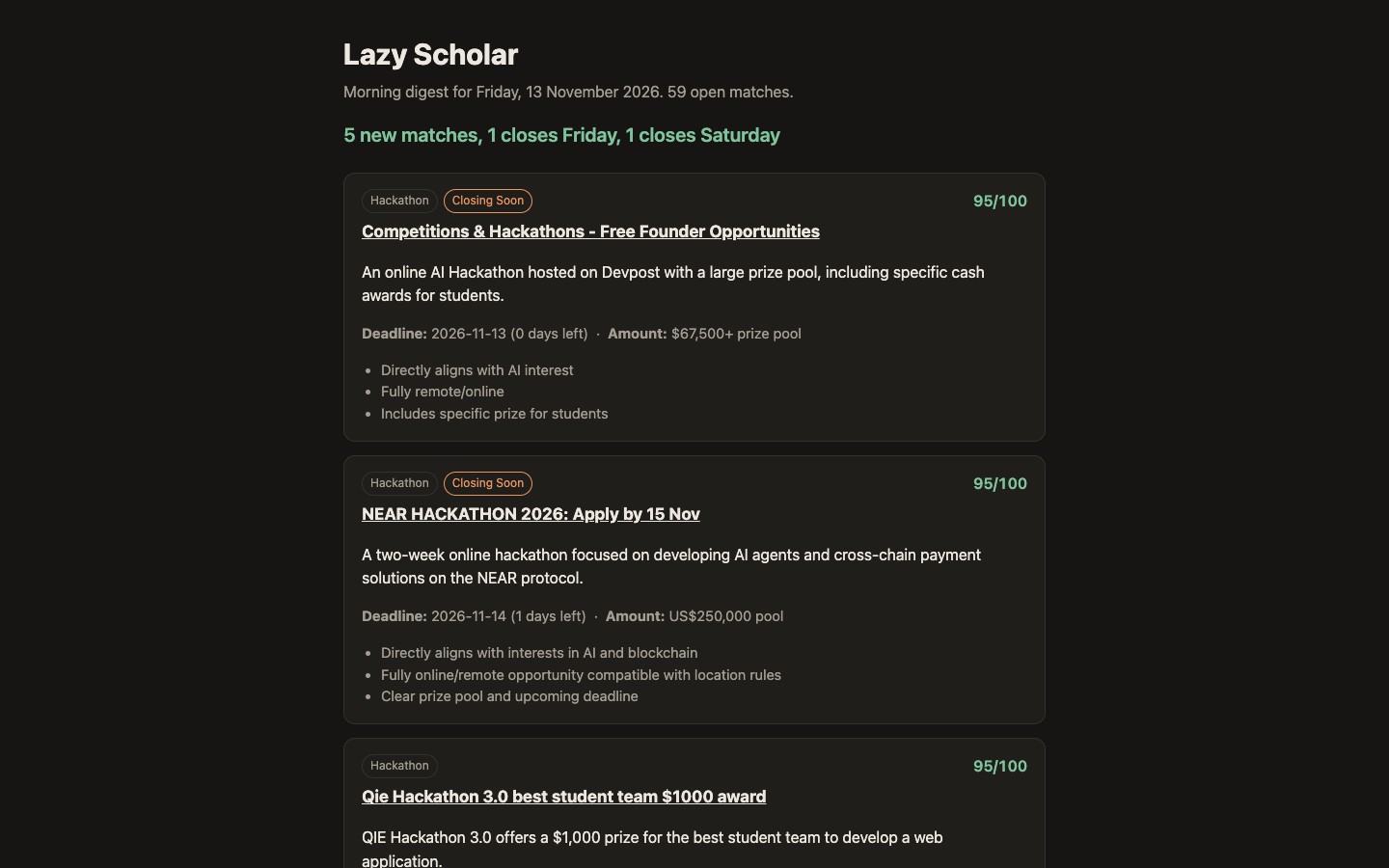
Read the Lazy Scholar write-up on DEV · Source on GitHub
Week 4: Closet 404
Built by Kanak Waradkar.
Theme: Ghost in the Machine.
Closet 404 lets you talk to 31 websites that have gone offline, including Kozmo, Friendster, AltaVista, Vine, and old GeoCities pages. Each site has a case on a shelf in a virtual closet. Pick a case, and Gemma 4 plays the site’s ghost, answering questions using text and comments preserved by the Wayback Machine.
Ask Kozmo’s ghost what it used to deliver, and it can answer from its archived homepage. Ask why Kozmo shut down, and the ghost draws on the app’s “coroner’s report.” To put that report together, the app runs one Google search per domain through SerpApi. Gemma summarizes those results and links to the sources it cites.
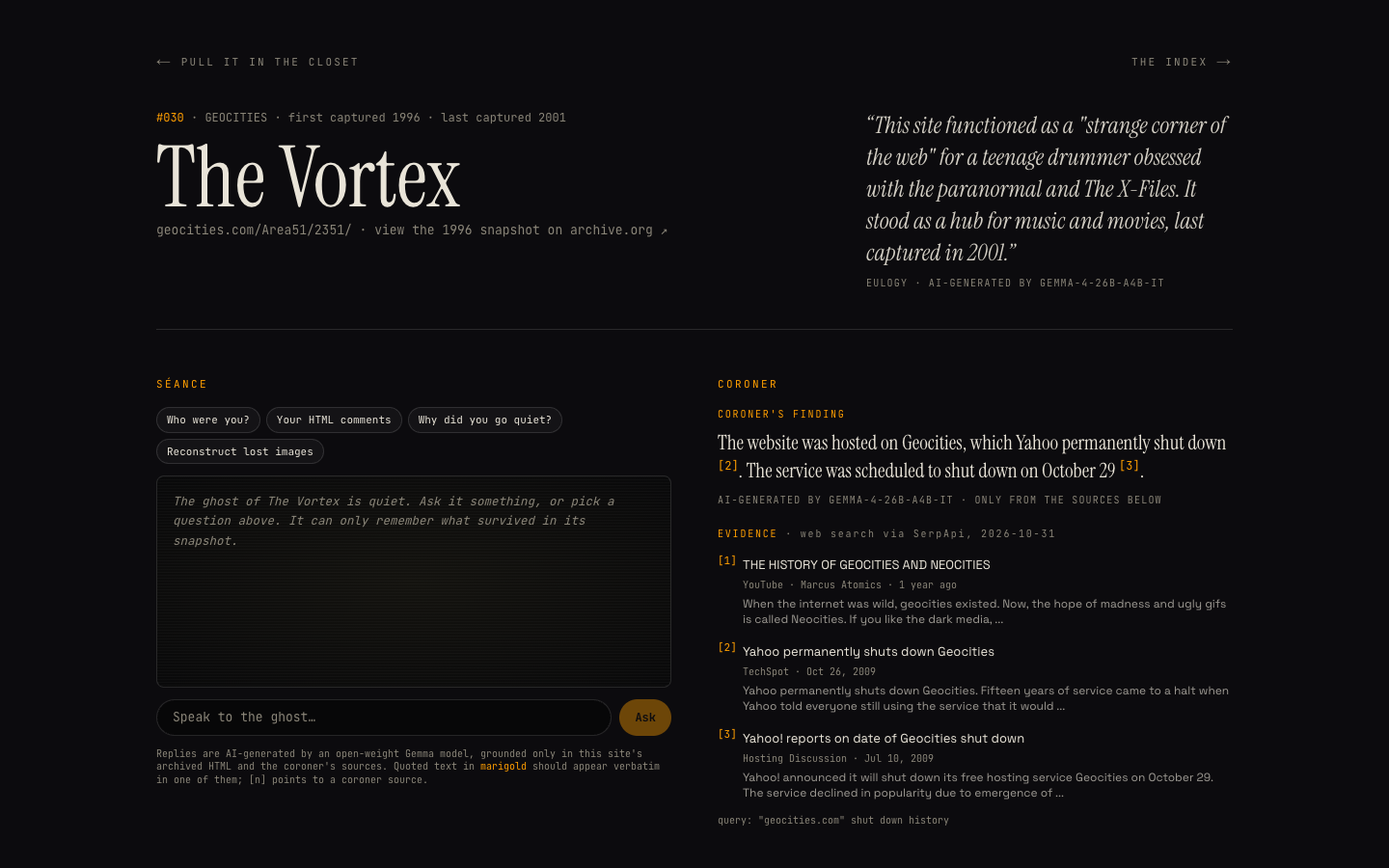
Read the Closet 404 write-up on DEV · Source on GitHub
More Projects We Enjoyed
- Worth the Walk?, by ADK BBX. Photograph a week of junk-mail flyers, and Gemma 4 sorts them and turns the shops worth visiting into stops on a walk. If a flyer has no usable address, SerpApi finds the business on Google Maps and checks whether the phone number matches.
- KTCL CommuteShield, by Kanak Waradkar. A bus guardian for a friend who commutes across Goa on a smart card that can fail at the gate after a late top-up. It checks the card balance and the next day's schedule, and SerpApi adds live Google results on highway flooding, bridge work, and route advisories before each trip.
- Wait For It, by Ibrahim Awab. Type what you're waiting for, such as a petrol price change, and stop checking. Gemma 4 reads the page you linked, or the past week of Google results through SerpApi when there is no link.
- HustleRadar, by Deep Saha. HustleRadar checks whether a discounted product is worth reselling by comparing live offers from Google Shopping and retailer pages through SerpApi. Each price links back to its source so you can check the offer yourself.
- OutThere, by Ariba Sayed. OutThere suggests the three best outdoor places nearby for the current weather and turns a walk into a small mission. It queries SerpApi's Google Maps API with the user's exact coordinates, then uses it to verify model suggestions.
Browse Hacktoberfest Projects Built with SerpApi
We've added more than 200 Hacktoberfest projects to BuiltWithSerpApi, our community showcase of open-source projects. You can find them all under the Hacktoberfest 2026 event tag.
Each project lists the SerpApi APIs it uses and links to its source code and its original DEV submission. If you built something with SerpApi and don't see it there, you can submit your project.
Thank You to Everyone Who Built
Congratulations to the five winners, and thank you to everyone who built with SerpApi this October and took the time to write about it.
Thank you also to MLH, DEV, and the Hacktoberfest team for running the challenges and having us on the livestream schedule.
The slides and demos from our livestream, Making Open Models Smarter with Tools, MCP, and Skills, are in the SerpApi Hacktoberfest 2026 repository.
If these projects gave you an idea, you can create a free SerpApi account with 250 searches each month.