
 Ruby
 Golang
 .NET
 MCP
 C++

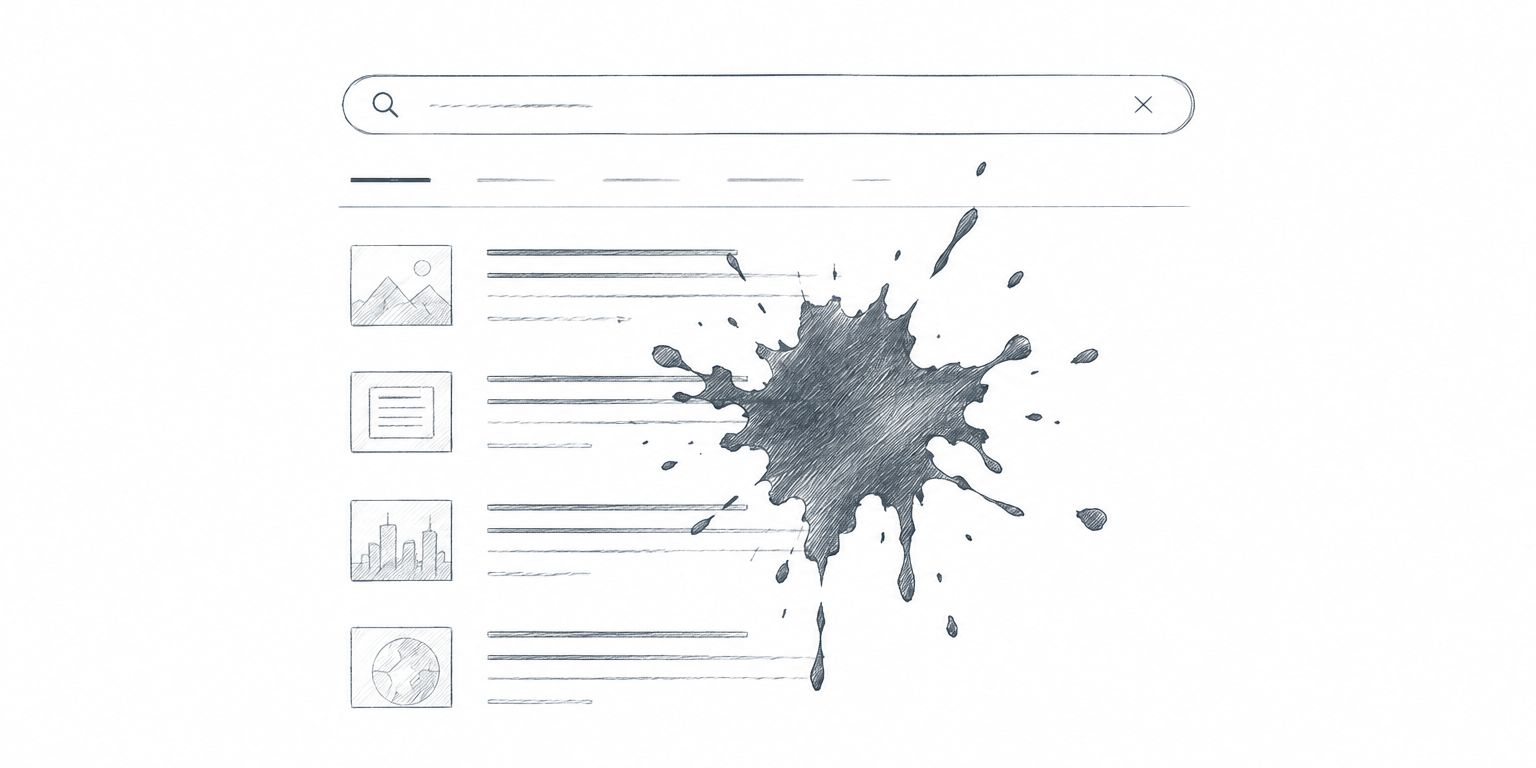
A Google Search request can succeed but return the wrong results. Some automated searches get a page that looks normal, even though the results can differ sharply from what someone sees when they run the same search manually. Search data providers have been calling these “poisoned” results. We’ve seen them at SerpApi, too. Read more about this issue in Search Engine Journal coverage
That matters beyond SEO. A rank tracker might report a drop that never happened. An AI agent might base its answer on sources that wouldn’t normally appear for that search. In both cases, the software has a page it can use, so the problem can go unnoticed.
As a sidenote, this behavior has also been observed on Bing.
Where we’re seeing it
Semrush reported two patterns. Some results pages contain clearly irrelevant links, even on page one. Others look relevant at the top but include loosely related links further down the same page.
We’ve seen this in our Google Search API on both the first page and later pages.
We’ve seen similar behavior in Google Shopping. In one example, an iPhone search returned other products in the top four spots in our Google Shopping API.
Reference:
- Google Search API issue.
- Google Shopping API issue
Why this is hard to detect
Rank trackers can compare a keyword’s results with its ranking history to spot an unusual change. A real-time search API often sees a query for the first time, so it has to make sense of the results without that baseline. Even when a query is familiar, rankings can change for legitimate reasons, and there’s no reliable on-page signal that tells us what kind of change we’re seeing.
We’ve also seen the issue vary by keyword. Getting accurate results for one search tells us little about how the next search will behave.
What we’re doing at SerpApi
We’re monitoring a set of queries whose top results are usually stable. This helps us spot unusual changes and see whether our updates are working. We’ve adjusted how we collect results to reduce how often this happens. We still see it intermittently and continue to adapt as Google’s responses change.
If you see an unexpected result in SerpApi, send us the search ID so we can investigate. Contact SerpApi support
For the latest updates, follow the incident on our status page.